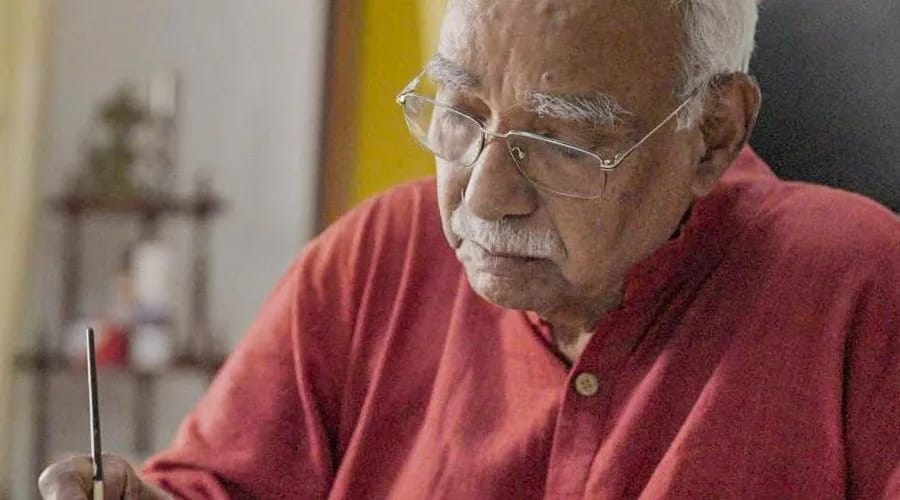
The use of technology is a common part of painting today – it adds to the process of making art, expands the materials available, and allows more people to see art. At the same time, it raises questions about how original art is and how sustainable it is. Galleries along with collectors must think about the questions with care. Artists such as Paresh Maity but also Thota Vaikuntam show that creativity is about finding a balance between new methods plus old ones. Galleries like ArtAliveGallery support this blend. The future of painting will be active. Technology means that each stroke of a brush, whether it is digital or on a canvas, continues the discussion between what was and what is now.
Early Influences and Artistic Journey
The artist Thota Vaikuntam was born in a small village in Andhra Pradesh. He grew up surrounded by the sights and sounds of rural India. From his childhood, he was fascinated by folk traditions, temple rituals along with everyday activities that defined the life of the community – he carried the impressions with him as he trained formally at the College of Fine Arts but also Architecture in Hyderabad. He studied at the Faculty of Fine Arts, Maharaja Sayajirao University in Baroda. His academic education combined with his lived experiences gave his work both depth and authenticity.
Theatrical elements also left a great impression on him. During his youth, he was captivated by traveling theatre groups. He saw their bright costumes, large gestures in addition to storytelling methods. This influence became evident in his dramatic use of color; he used stylized figures and narrative compositions that resemble stage performances.
The Language of Rural Identity
The thota vaikuntam paintings stand apart; they show the rural identity of Telangana. His subjects are villagers, priests, farmers along with women. A special grace depicts the women. The women have dusky skin, decorated sarees in addition to expressive eyes. They show both power and beauty. Through them, Vaikuntam shows individual people and a community. This community connects to its land plus traditions.
The men in his paintings wear turbans, mustaches next to dhotis – they show rural masculinity. Each figure carries an untold story of resilience, as they work in the fields, perform rituals, or do simple domestic tasks.
Use of Color and Symbolism
The color in Vaikuntam’s visual language is important. A palette of warm, earthy colors, such as reds, yellows along with browns, shows life, reproduction in addition to the value of tradition. Contrasting blues, greens next to blacks balance the colors, which give movement and depth to a canvas. The colors tell a story. As an example, a deep red sari does not just show a bright rural clothing item – it also represents cultural events, celebrations, life. Bold outlines add to the theatrical quality of his subjects, similar to the folk art that inspired him.
Women at the Heart of Tradition
A notable aspect of Vaikuntam’s art is his focus on women. From a different perspective, the women in his work stand as central figures; they are guardians of culture, bearers of tradition along with symbols of resilience. Their faces are often stoic, yet they hold emotion. They tell stories of endurance, faith in addition to inner strength.
With the depictions, he challenges the stereotypical portrayals of women. He places them at the core of village life. Whether they are busy with domestic chores, temple rituals, or just present in quiet dignity, Vaikuntam’s women hold a presence that commands attention.
A Blend of Modernity and Tradition
Though deeply traditional in subject matter, Vaikuntam’s approach is modern in its execution. His figures are stylized, with exaggerated features and bold contours, aligning him with the language of contemporary art. At the same time, his themes remain timeless, creating a balance between innovation and heritage.
This duality has made his work accessible to both Indian and international audiences. While rooted in local culture, the universal themes of community, resilience, and human connection resonate across borders. His paintings bridge the gap between local identity and global appreciation.
Rural Narratives as Visual Theatre
Every canvas by Vaikuntam looks like a scene on a stage. The influence from his early years shows in the dramatic postures, elaborate costumes along with expressive gestures of his subjects. The villagers of Telangana step into the limelight – their everyday lives become performances.
This narrative quality means that his art is not static but alive inviting viewers to imagine the conversations, songs in addition to rituals that surround the figures. The paintings become windows into lived experiences.
\The Cultural Legacy of Vaikuntam’s Art
The work of Vaikuntam possesses much cultural worth. At a time when quick urbanization threatens to blur rural traditions, his paintings act as documentation of a way of life that continues to define the soul of India. Through immortalizing the attire, rituals along with expressions of village life, he preserves intangible heritage through visual storytelling. Collectors and art enthusiasts view his work not only as artistic masterpieces but also as cultural treasures; they embody the philosophy that art is both an expression and a preservation of identity.
The Role of ArtAliveGallery
The galleries play a large part in showing Vaikuntam’s art to many people. An institution like ArtAliveGallery presents his works to art buyers and new fans. That shows the stories on his paintings reach many places. Through shows and displays, such galleries join the rural roots of his art plus the global art stage.
They also show the need to help artists whose art mirrors real cultural tales. For many viewers seeing Vaikuntam’s art in such places is not just about liking the artist’s skill – it is also about a connection with rural India’s customs.
Why Vaikuntam’s Art Still Matters Today
The paintings by Vaikuntam show the importance of origins; they reveal that village life, with its simple character, continues to shape Indian culture. His art offers a different view from modern isolation encouraging a return to traditions that establish identity.
For younger generations, his paintings are lessons about history and culture. They teach one to value work, rituals along with the simple appearance of things. For art lovers, they are reminders that human stories, even if local, appeal to many people.
Conclusion
The art of Thota Vaikuntam offers a view of tradition, community along with identity. His paintings show rural Telangana, as they capture its people with honesty and dignity. Through his art, he turns lives into expressions of cultural pride.
As his works inspire people, supported by platforms like ArtAliveGallery, a truth becomes clear – the colors of tradition do not fade; they live on through his art echoing the heartbeat of villages. Because heritage, when celebrated, keeps its power.