Key Takeaways
- Recruitment has transformed dramatically from manual, paper-based processes to advanced, AI-driven methods.
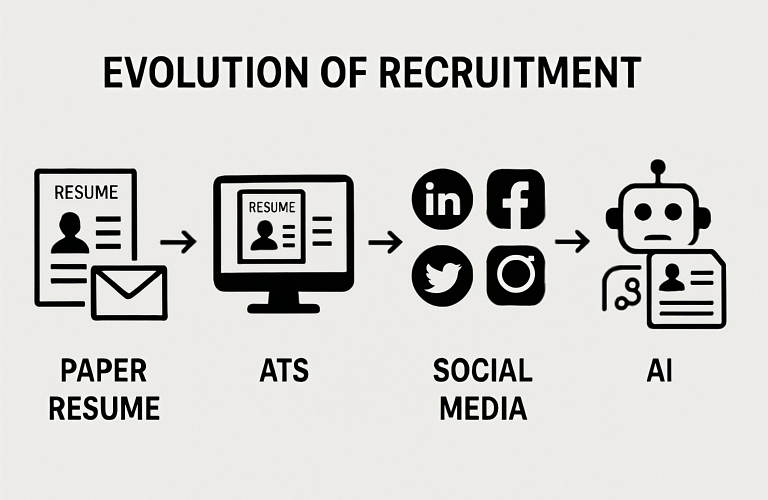
- Technology such as Applicant Tracking Systems (ATS), social media, big data, and AI has each played a pivotal role in this evolution.
- Modern recruitment prioritizes efficiency, data-driven insights, and a more engaging candidate experience.
Table of Contents
- The Era of Manual Recruitment
- The Rise of Applicant Tracking Systems
- The Impact of Social Media
- Big Data and Analytics Transform Hiring
- AI and Machine Learning in Recruitment
The recruitment landscape has witnessed a profound shift over recent decades, moving from a time-intensive, largely paper-based process to a high-tech arena dominated by digitization and automation. Historically, the recruitment process involved manual resume handling, classified ads in newspapers, and long waits for postal correspondence between employers and candidates. This traditional approach not only consumed enormous amounts of time and resources but also made it challenging to access vast pools of talent or adjust quickly to changing job market needs. Nowadays, recruitment is defined by its seamless integration with powerful digital platforms and technology, which allow organizations to reach global talent and streamline their end-to-end hiring workflows. To define recruit in the current era is to recognize it as a highly strategic, technology-driven process that aims for more effective, faster, and inclusive hiring experiences.
The journey from the simplicity of paper resumes to the sophistication of predictive analytics in recruitment showcases how technological innovation has continually redefined best practices in talent acquisition. Today, recruiters rely on advanced digital tools—from Applicant Tracking Systems (ATS) and social recruiting networks to AI and big data analytics—to optimize each stage of the hiring funnel. The shift has increased operational efficiency and changed candidate expectations, making transparency, feedback, and personalization crucial elements of the modern recruitment journey.
The Era of Manual Recruitment
Before the digital age, recruitment was a manual process that relied on newspaper classifieds, word of mouth, and bulletin boards. Candidates submitted physical resumes and cover letters, which recruiters would read and organize into files by hand. This approach often resulted in bottlenecks and missed opportunities to connect with talented individuals. Scheduling interviews required numerous phone calls and extensive note-taking, further slowing the process.
Although this era allowed for personal connections through face-to-face interviews, it had significant limitations. The process was slow, geographically restricted, and susceptible to human error and bias. As globalization expanded job markets, organizations sought more scalable, efficient, and equitable recruitment methods.
The Rise of Applicant Tracking Systems
The early 2000s ushered in a new era for recruitment with the advent of Applicant Tracking Systems (ATS)—dedicated digital platforms that fundamentally changed how organizations processed candidates. ATS solutions allowed recruiters to collect, organize, and evaluate resumes electronically, dramatically cutting down the time spent on administrative tasks. With digital records, businesses could maintain comprehensive talent databases, access applications anywhere, and search for candidates by skills or experience using keyword filters.
Despite simplifying resume management and communications with candidates, the initial versions of ATS were frequently perceived as impersonal and inflexible. Overly aggressive keyword filtering meant highly qualified applicants could be automatically screened out if their resumes failed to match predefined terms, even if they possessed the right experience. Nevertheless, ATS platforms laid the foundations for managing high-volume recruitment and introduced data-driven decision-making.
The Impact of Social Media
The rise of social media platforms in the mid-2000s transformed recruitment by providing direct access to vast professional audiences. Recruiters leveraged LinkedIn, Facebook, and Twitter platforms to promote job vacancies, identify passive candidates, and enhance employer branding. This shift allowed organizations to engage with professionals who were not actively seeking jobs, leading to quicker and more relevant candidate matches.
Social media also changed how talent was evaluated, with profiles and shared content offering insights into candidates’ interests and cultural fit. Recruiters could verify resume claims and better understand candidates beyond formal applications. For job seekers, these platforms provided transparency into company culture, fostering mutual understanding and new expectations for openness in hiring.
Big Data and Analytics Transform Hiring
As organizations digitize recruitment, data collection expands, enhancing analytics capabilities. Modern recruitment captures every interaction in the hiring process, enabling HR departments to analyze trends, identify skill gaps, and optimize job postings and outreach strategies. Predictive analytics allows companies to forecast candidate success and retention, leading to more strategic, data-driven decisions. This approach reduces guesswork, mitigates risk, and improves diversity and time-to-hire, proving transformative for recruitment.
AI and Machine Learning in Recruitment
The hiring landscape is transforming with Artificial Intelligence (AI) and Machine Learning (ML), enhancing recruitment through increased personalization and efficiency. AI platforms can quickly analyze resumes and online profiles, accurately matching candidates to job requirements while reducing bias. These systems can spot high-potential candidates without traditional qualifications using natural language processing and pattern recognition.
Moreover, AI automation now supports virtual interviews, chatbots, and assessment tools, providing immediate, personalized feedback and streamlining scheduling. This allows recruiters to concentrate on deeper evaluations and relationship-building, while candidates enjoy transparency, quicker communication, and a smoother application process, making for a more engaging experience.